

Key Summary:
Every 1kg of body weight lost reduces knee joint load by approximately 4kg during walking, with studies showing 5-10% weight loss (7.7kg average) produces statistically significant pain reduction and improved function in knee osteoarthritis patients. While weight management forms a crucial foundation, clinical treatments like targeted injections complement these gains—over 75% of patients see better outcomes when combining lifestyle changes with specialist care at centres such as Specialist Pain International Clinic in Singapore with Dr Nicholas Chua.
Knee pain from osteoarthritis affects over 30% of adults over 50, with excess weight dramatically increasing joint stress during every step. While many understand the basic connection between weight and knee pain, fewer realise the precise mechanics of load reduction or how weight loss amplifies the effectiveness of modern pain treatments. This guide explains the science, realistic expectations, and how specialists integrate weight management with targeted clinical interventions for better, faster results.
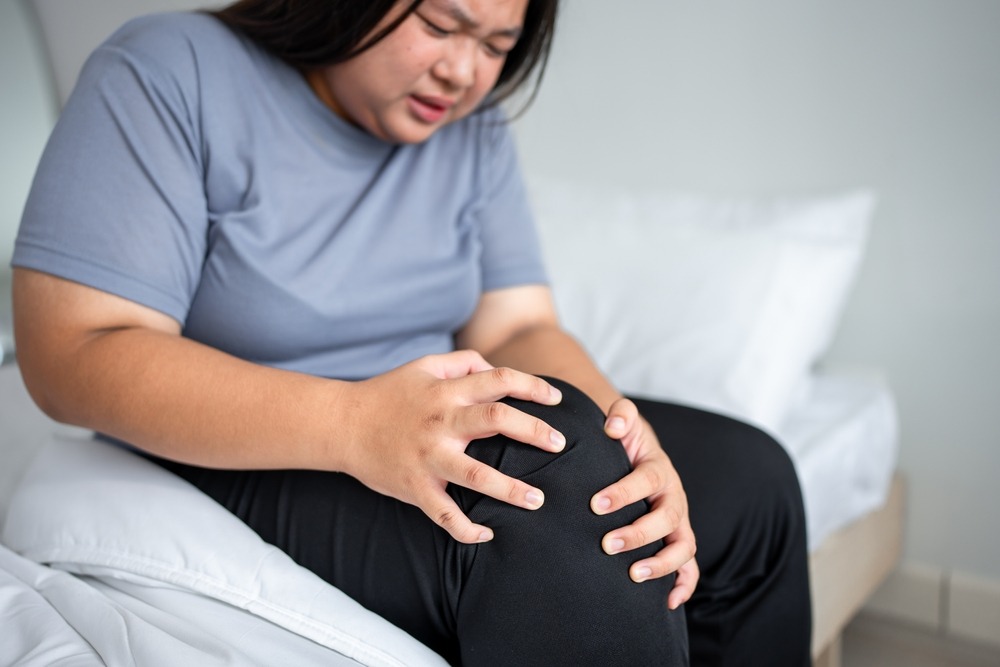
Knee Joint Mechanics: Why Weight Matters So Much
During normal walking, each knee bears 3-4 times your body weight with every step. A person weighing 80kg places approximately 320kg of force across both knees per stride. Losing just 1kg reduces this by 4kg per step—or 8kg total across both knees. Over 10,000 daily steps, this creates substantial cumulative relief.
For patients with worn cartilage (osteoarthritis), this load reduction becomes even more critical. Less force means less pain, inflammation, and cartilage breakdown, particularly during weight-bearing activities like stairs, squatting, or standing from chairs.
Who Benefits Most from Weight Loss for Knee Pain
Weight loss produces the clearest benefits when:
- – Excess weight contributes significantly to symptoms (typically BMI ≥27 with knee OA)
- – Pain limits exercise capacity, creating a vicious cycle
- – Patients combine weight reduction with structured physiotherapy
- – Structural damage exists but is not yet end-stage (where surgery becomes primary)
Patients who lose 5-10% of body weight often notice meaningful improvements within 6-12 months, particularly when pain previously limited walking distance or stair climbing.
Evidence from Weight Loss Studies
Real-World Clinical Results
Large randomised trials demonstrate clear dose-response relationships:
18-month community-based diet + exercise trial (n=823 knee OA patients):
- – Intervention group lost 7.7kg (8% body weight) vs 1.7kg in controls
- – Statistically significant WOMAC pain reduction (−0.6 points, p=0.01)
- – 20% more likely to achieve moderate pain improvement
- – 32% reached 10% weight loss target
Longer-term data shows sustained benefits:
- – 5-year follow-up: ≥13.3% BMI reduction linked to 74% lower progression risk
- – ≥20% weight loss group had 25% less pain than 10% group
Weight Loss Impact Table
Weight Loss Achieved | Knee Load Reduction Per Step | Typical Pain Improvement | Function Gains |
5% (~4kg) | ~16kg total (both knees) | Small but significant | Better walking tolerance |
10% (~8kg) | ~32kg total (both knees) | Moderate WOMAC improvement | Stair climbing ↑20-30% |
≥20% (~16kg+) | ~64kg+ total (both knees) | 25% better than 10% group | Significant QOL gains |
How Weight Loss Complements Modern Treatments
Physiotherapy Amplification
Weight loss makes rehabilitation more effective:
- – Lighter body weight = easier exercise progression
- – Reduced joint irritation = better therapy tolerance
- – Improved pain allows deeper strengthening work
Patients who lose 5-10% pre-treatment often progress 2x faster through physiotherapy milestones.
Injection Therapy Enhancement
Targeted knee injections (corticosteroid, hyaluronic acid, PRP) work better with lower joint loads:
Treatment | Weight Loss <5% | Weight Loss ≥10% |
Corticosteroid Injection | 3-6 months relief | 6-12 months relief |
Hyaluronic Acid | Variable response | 70%+ report benefit |
Physiotherapy Post-Injection | Limited progress | 2x faster milestones |
Surgical Outcomes Improvement
Even patients heading toward knee replacement benefit:
- – ≥7.5% weight loss reduces total knee replacement risk
- – Better pre-surgical fitness = faster recovery
- – ≥20% loss linked to structural joint preservation
Practical Weight Management for Knee Patients
Achievable First Steps
- – Aim for 5-7% loss first (realistic for most)
- – Focus on sustainable dietary patterns over crash diets
- – Combine with low-impact exercise (water therapy, stationary bike)
- – Track progress by pain/function rather than just scale weight
When Weight Loss Alone Isn't Enough
Red Flags Requiring Specialist Review
Consider clinical assessment if:
- – Pain persists despite 5%+ weight loss over 3-6 months
- – Night pain, swelling, or deformity develops
- – Walking limited to <10 minutes continuously
- – Instability, locking, or giving way episodes
Specialist Pain International Clinic Approach
Specialist Pain International Clinic (SPI) in Singapore, led by Dr Nicholas Chua at Mount Elizabeth Novena, integrates weight management into comprehensive knee pain care:
- – Detailed assessment of weight’s contribution vs structural damage
- – Guidance on realistic weight loss targets paired with treatment plans
- – Image-guided injections timed to maximise rehabilitation gains
- – Coordination with dietitians, physiotherapists for multi-disciplinary support
For patients who’ve lost weight but still struggle—or cannot lose weight due to pain—a structured clinical plan often provides the breakthrough needed to break the cycle.
Links
- https://jamanetwork.com/journals/jama/fullarticle/2799405
- https://www.nature.com/articles/s41366-021-00832-3
- https://journalofmetabolichealth.org/index.php/jmh/article/view/97/338
- https://pmc.ncbi.nlm.nih.gov/articles/PMC11758707/
- https://pmc.ncbi.nlm.nih.gov/articles/PMC6203601/
- https://www.sciencedirect.com/science/article/pii/S1526590024005972
- https://www.arthritis.org/news/study-confirms-losing-weight-may-save-knees
- https://www.sciencedirect.com/science/article/pii/S1063458425000238