Key Summary:
Shockwave therapy usually requires a series of 3 to 6 treatments, with sessions spaced about one week apart. While some patients notice improvements after their first session, most experience meaningful pain relief over several weeks as the body gradually repairs damaged tissue. Learn what to expect during treatment, how long recovery typically takes, and why results vary depending on your condition and rehabilitation programme.
Shockwave therapy has become an increasingly popular non-surgical treatment for chronic tendon and joint pain. One of the most common questions patients ask is: “How many sessions will I need before I start feeling better?”
Unlike painkillers, which provide temporary symptom relief, shockwave therapy works by stimulating your body’s natural healing processes. Because tissue repair takes time, improvements usually occur gradually over several weeks rather than immediately after treatment.
Here’s what you can realistically expect throughout your treatment journey.
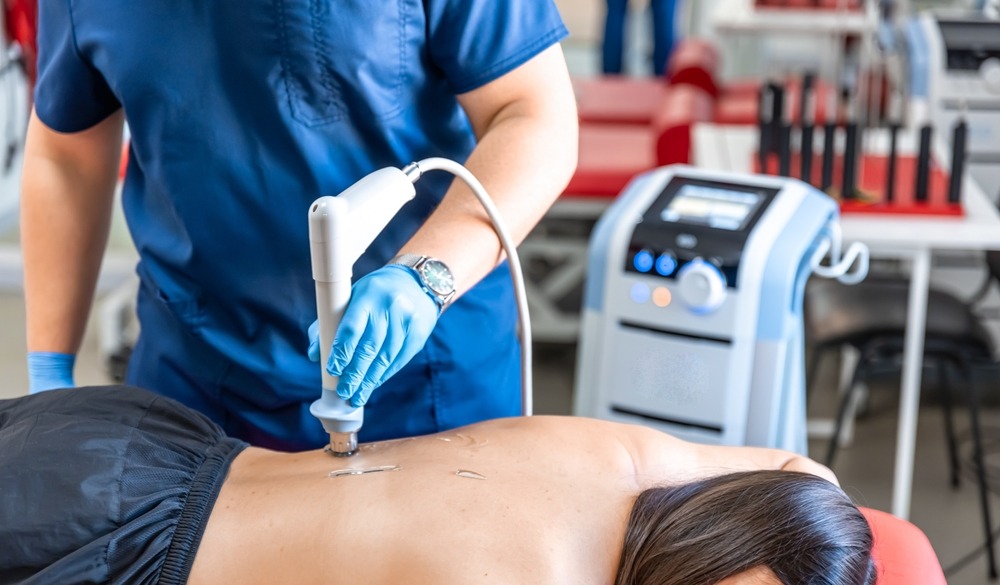
How Shockwave Therapy Promotes Healing
Shockwave therapy delivers acoustic waves into the affected tissue, stimulating blood flow, growth factors, and the body’s natural repair mechanisms. Rather than simply masking pain, it encourages healing within damaged tendons and other soft tissues.
Recovery typically occurs in three stages:
- – Early phase (Days 1-7): Mild inflammation begins the healing response.
- – Repair phase (Weeks 2-6): New collagen is produced and tissue strength gradually improves.
- – Remodelling phase (Weeks 8-12): Healing continues as the repaired tissue matures, with many patients experiencing their greatest improvement during this period.
Session Requirements by Condition
Condition | Sessions | Pain Relief Onset | Peak Benefit |
Plantar Fasciitis | 3-5 | Week 3-6 | Week 8-12 |
Tennis Elbow | 3-4 | Week 2-4 | Week 6-8 |
Achilles Tendinopathy | 4-6 | Week 4-6 | Week 10-12 |
Rotator Cuff | 3-5 | Week 3-6 | Week 8-12 |
Knee OA | 3-5 | Week 4-8 | Week 12+ |
Week-by-Week Expectations
Session 1: You may experience mild discomfort during treatment, followed by temporary soreness for one to three days. Some patients notice early improvements, although most do not experience significant pain relief immediately.
Weeks 1-3: As treatment continues, the body’s healing response becomes more active. It is common for symptoms to fluctuate during this stage, and some patients may even experience a temporary increase in soreness before improvement begins.
Weeks 3-6: Many patients begin noticing gradual reductions in pain and improvements in everyday activities. Physiotherapy and strengthening exercises are often introduced or progressed during this stage to maximise recovery.
Weeks 8-12: Healing continues even after the final shockwave session. Pain relief and function often continue improving over the following weeks as the repaired tissue matures.
Response Patterns Across Patients
Recovery after shockwave therapy varies from person to person. Some patients notice improvements after just one or two sessions, particularly if their condition is relatively recent or less severe. However, most people experience gradual improvements over several weeks as the body’s natural healing processes take effect. For long-standing tendon injuries or more advanced degenerative conditions, it may take longer before meaningful pain relief is achieved, and additional treatment sessions or a longer rehabilitation programme may be recommended. Your doctor will monitor your progress throughout treatment and adjust the plan based on how you respond.
Fast responders (20-30%):
Immediate post-session relief persisting weeks 1-3. Mild chronicity (<6 months), good vascularity.
Standard responders (60-70%):
Progressive improvement sessions 2-4, peak week 8-12. Most tendinopathies, early OA.
Slow responders (10-15%):
Minimal relief until week 6+, peak month 3-4. Long-standing (>18 months), degenerative changes.
What Can Improve Your Results?
- – Completing the recommended number of sessions
- – Following your rehabilitation or physiotherapy programme
- – Performing prescribed strengthening exercises
- – Avoiding activities that overload the injured tissue too early
- – Following your doctor’s post-treatment advice
Timeline Predictors Table
Factor | Faster Response | Slower Response |
Duration | <6 months | >18 months |
Vascularity | Good Doppler flow | Poor neovascularity |
Compliance | Full physio protocol | NSAID/ice overuse |
Equipment | Focused ESWT | Radial only |
Operator | >100 cases/year | Learning curve |
When Additional Sessions Help
While many patients improve after three to six sessions, additional treatments may be recommended if symptoms have only partially improved or if the condition has been present for a long time.
Your doctor will review your progress throughout treatment and decide whether further sessions are likely to provide additional benefit.
Examples of Typical Recovery Timelines
Every patient’s recovery is different, but the following examples illustrate common treatment patterns.
Plantar fasciitis (most common):
Session 1: Soreness days 2-3
Week 3: 40% morning pain reduction
Week 6: 70% able walking barefoot
Week 12: 85% minimal symptoms
Tennis elbow:
Session 1: Grip improves 15%
Week 2: 50% pain-free lifting
Week 6: Full racquet sports return
Knee osteoarthritis:
Week 4: Stair tolerance doubles
Week 8: 2.5-point VAS improvement
Week 12: 60% delay arthroplasty
Shockwave Therapy & Rehabilitation at Specialist Pain International
Shockwave therapy works best when it forms part of a comprehensive treatment plan. Depending on your condition, your doctor may combine treatment with physiotherapy, strengthening exercises, activity modification, or other pain management strategies to support long-term recovery.
At Specialist Pain International Clinic, shockwave therapy is tailored to each patient’s diagnosis and stage of recovery. Following a detailed assessment, treatment may be combined with ultrasound evaluation, rehabilitation, and other non-surgical pain management options where appropriate.
Regular reviews help monitor progress and determine whether additional treatment sessions are needed to achieve the best possible outcome.
- https://trophyskin.com/blogs/blog/how-long-does-shockwave-therapy-take-to-work
- https://lakesidesportschiro.com/understanding-shockwave-therapy-efficacy-timeline/
- https://www.nexushealthspan.com/blog/what-is-the-typical-duration-of-shockwave-treatment-and-the-number-of-sessions-required-for-noticeable-results
- https://softwaveclinics.com/blog/how-long-does-shockwave-take-to-work/
- https://theguyerinstitute.com/2020/06/01/how-long-does-it-take-for-shockwave-therapy-to-work/
- https://www.physisrehab.com/how-to-get-maximum-shockwave-therapy-benefits-a-patients-guide-to-fast-recovery/
- https://advanced-wellness.net/blog/shockwave-therapy-plantar-fasciitis-results/
- https://www.alluremedspa.com/blog/results-timeline-for-shockwave-therapy-for-ed/
- https://www.radiantphysiotherapy.ca/single-post/how-long-does-it-take-for-shockwavetherapy-to-work
- https://thediscchiropractic.com/are-shockwave-therapy-results-permanent-w