

Key Summary:
Radiofrequency ablation (RFA) uses precisely controlled heat (80-90°C) to interrupt pain-transmitting nerves, providing 70-80% of patients with 6-24 months relief for facet joint, sacroiliac, and knee pain without opioids or surgery. Diagnostic nerve blocks predict 85% success rates; repeat procedures safe every 6-12 months as nerves regenerate. Available at Specialist Pain International Clinic in Singapore with Dr Nicholas Chua.
Many people living with chronic back, neck, knee, or sacroiliac joint pain eventually reach a frustrating crossroads. Medications may only provide temporary relief, physiotherapy may not be enough, and surgery can feel like a major step they are not ready to take.
Radiofrequency ablation (RFA) offers another option. It is a minimally invasive procedure designed to interrupt pain signals from specific nerves, helping patients achieve longer-lasting pain relief without major surgery or long recovery periods.
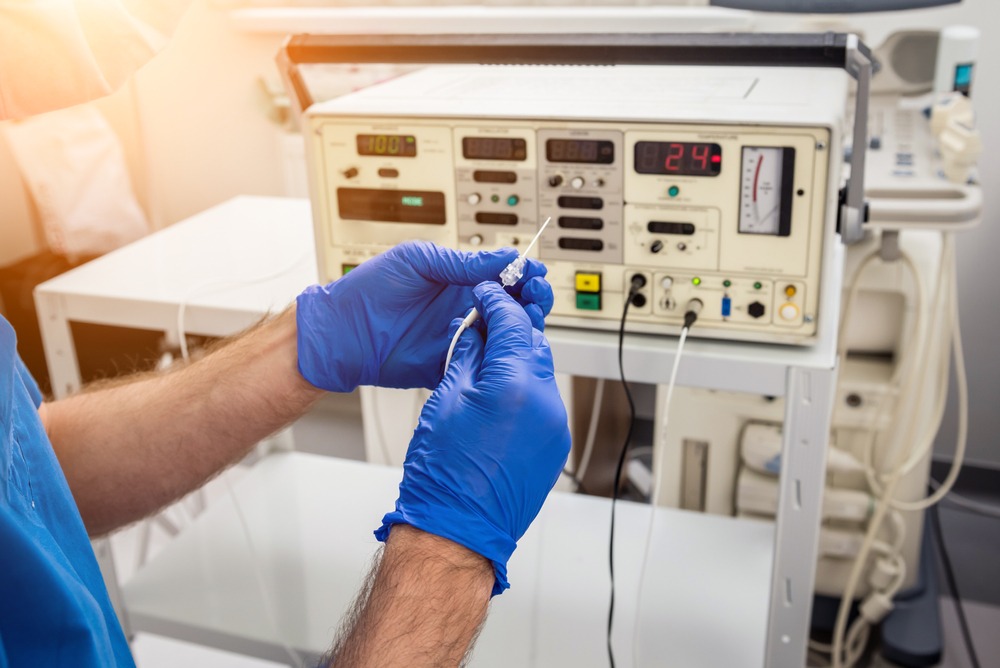
What is Radiofrequency Ablation?
One of the most common questions patients ask is whether RFA is a form of surgery. The answer is no. RFA is a minimally invasive outpatient procedure that targets specific pain-transmitting nerves without removing or altering any joints, discs or bones.
RFA delivers radiofrequency energy through a needle electrode to create a small, predictable lesion (6-12mm) on specific pain-transmitting nerves. Unlike opioids that mask symptoms or surgery that removes structures, RFA temporarily disables the nerve’s ability to send pain signals while preserving motor function and sensation.
How RFA "Resets" Pain Signals
The procedure heats targeted nerves to 80-90°C for 60-90 seconds, causing coagulative necrosis that interrupts nociceptive transmission:
- – Thermal lesion creation: Protein denaturation stops nerve conduction
- – Selective targeting: Sensory nerves affected; motor nerves preserved
- – Nerve regeneration: Effects last 6-24 months until regrowth occurs
- – Predictable volume: 360° spherical lesion radius controlled by temperature/time
Pain travels through nerves much like messages travelling along a communication network. RFA works by applying controlled thermal energy to a targeted nerve, creating a small treatment zone that interrupts its ability to transmit pain signals. The nerve remains physically present, but its pain-signalling function is temporarily disrupted.
The effects are not permanent because nerves can regenerate over time. However, many patients experience meaningful relief for 6-24 months before symptoms gradually return.
There are two commonly used approaches:
Thermal (Conventional) RFA | Pulsed RFA |
|
|
Step-by-Step Procedure
RFA is typically performed as a day procedure under local anaesthesia.
- 1. Confirming the correct pain source through diagnostic nerve blocks – 75-80% relief from medial branch/nerve block confirms target
- 2. Using imaging guidance (fluoroscopy) to position the treatment needle accurately
- 3. Testing the target nerve before treatment
- 4. Delivering controlled radiofrequency energy depending on the approach
- 5. Patients usually return home on the same day and resume normal activities within 24 hours
Primary Applications and Success Rates
Condition | Target Nerve | Success Rate | Duration | Repeat Cycle |
Lumbar Facet Pain | Medial Branch | 70-80% | 9-24 months | 12-18 months |
Cervical Facet Pain | Medial Branch | 65-75% | 6-18 months | 12 months |
Sacroiliac Joint | Lateral Branch | 60-75% | 12-18 months | 12-18 months |
Knee OA | Genicular Nerves | 70-80% | 6-24 months | 12 months |
Hip OA | Articular Branches | 65-75% | 6-18 months | 12 months |
Patient Experience and Timeline
Recovery is generally straightforward. Many patients return home shortly after the procedure and resume light activities the same day.
Typical experience timeline:
- – First few days: Mild soreness around the treatment site. It is common to have 20-40% pain reduction immediately post-procedure
- – Week 1-2: Peak nerve disruption effect, gradual reduction in pain
- – Week 4-6: Maximum benefit often becomes apparent (70-80% relief is typical)
- – Month 6-12: Gradual symptom return possible
Some patients experience improvement sooner, while others notice a more gradual response.
Why RFA Outperforms Alternatives
Patients often ask whether RFA is better than injections, medications, or surgery. The answer depends on the underlying condition and the source of pain.
In general, RFA occupies a unique position because it can provide long-lasting relief while remaining considerably less invasive than surgery.
Treatment | Pain Relief Duration | Side Effects | Invasiveness |
Oral Opioids | Days-weeks | High (addiction, sedation) | None |
Epidural Steroid | 1-6 months | Variable | Moderate |
RFA | 6-24 months | Minimal | Low |
Spinal Cord Stim | Indefinite | Device-related | High |
Surgery | Variable | High | Very High |
Ideal Candidates
Excellent response expected (80%+):
- – Positive diagnostic block (≥80% temporary relief)
- – Facet-mediated pain confirmed by exam/imaging
- – Symptoms >6 months despite conservative care
Good candidates (60-70%):
- – Mixed pain generators with predominant joint component
- – Previous steroid injection responders
Poor candidates (<40%):
- – Predominantly discogenic pain
- – Complex regional pain syndrome
- – Severe psychological overlay
Safety Profile and Risks
RFA has been used for many years and has a strong safety record when performed by experienced practitioners.
Complications are uncommon and most side effects are temporary. Potential risks include:
- – Temporary soreness (most common)
- – Rare neuritis (<0.5%)
- – Motor weakness (<0.1%)
- – Infection (<0.1%)
Repeat Treatment Strategy
Nerves regenerate at 1-2mm/month; repeat RFA timing:
- – Lumbar: 12-18 months (longer nerves)
- – Cervical: 9-12 months (shorter course)
- – Peripheral: 6-12 months variable
Specialist Integration at SPI
One misconception is that chronic pain always requires progressively stronger medication or surgery. In reality, many forms of chronic joint-related pain arise from specific pain-transmitting nerves that can be identified and treated directly.
RFA allows specialists to target these pain pathways with precision, often creating a window of reduced pain that enables patients to return to exercise, rehabilitation, and normal daily activities more comfortably. For many patients, the goal is not simply pain reduction, but restoring movement, function, and quality of life.
At Specialist Pain International Clinic (SPI) in Singapore, Dr Nicholas Chua uses a structured approach to radiofrequency ablation that begins with careful diagnosis and patient selection, optimised with a structured protocol combining diagnostic precision and multidisciplinary care
Diagnostic nerve blocks help confirm the primary pain source before treatment is recommended. RFA is then integrated with rehabilitation, strengthening, and lifestyle modification strategies to maximise long-term outcomes. For patients with confirmed facet joint, SI joint, or peripheral joint pain that has not responded adequately to conservative care, RFA can provide significant and durable relief without the need for major surgery.
- https://pubmed.ncbi.nlm.nih.gov/11690569/?dopt=Abstract
- https://my.clevelandclinic.org/health/treatments/17411-radiofrequency-ablation
- https://www.youtube.com/watch?v=GWCqjdIv1aU
- https://www.mayoclinichealthsystem.org/hometown-health/speaking-of-health/radiofrequency-ablation-pain-relief
- https://www.essentialsportsspine.com/guide-to-medial-branch-blocks-and-radiofrequency-ablation/
- https://pmc.ncbi.nlm.nih.gov/articles/PMC9273139/
- https://asra.com/news-publications/asra-newsletter/newsletter-item/asra-news/2020/08/01/radiofrequency-ablation-and-its-role-in-treating-chronic-pain
- https://www.youtube.com/watch?v=1oyQ38g-y10
- https://sncs-prod-external.mayo.edu/hometown-health/speaking-of-health/radiofrequency-ablation-pain-relief
- https://www.ncbi.nlm.nih.gov/books/NBK482387/