Mt. Elizabeth Novena Medical Centre 38 Irrawaddy Road, #09-43 Singapore 329563
Mt. Elizabeth Novena Medical Centre 38 Irrawaddy Road, #09-43 Singapore 329563

Mt. Elizabeth Novena Medical Centre 38 Irrawaddy Road, #09-43 Singapore 329563
Mt. Elizabeth Novena Medical Centre 38 Irrawaddy Road, #09-43 Singapore 329563

Medically reviewed by Dr Nicholas Chua
Medical Director and Consultant in Pain Medicine and Anaesthesiology,
Specialist Pain International.
About Dr Chua · Research & Professional Contributions
Treatment: An image-guided injection into a facet joint, usually using local anaesthetic and sometimes a corticosteroid
Purpose: May help investigate a suspected pain source or provide temporary relief in selected patients.
Suitability: Depends on your symptoms, examination, previous care and the purpose of the injection.
Results: Relief varies. An injection does not reverse arthritis or guarantee lasting improvement.
A facet joint injection places medicine into a small joint at the back of the spine. It may be considered in selected cases to investigate or temporarily relieve pain thought to come from that joint.
Facet joint pain can affect the lower back or neck. However, similar symptoms can arise from discs, muscles and other structures, so assessment is important before deciding whether an injection is appropriate.
If persistent back or neck pain is affecting your daily life, Dr Nicholas Chua at Specialist Pain International can review your symptoms and discuss suitable treatment options.
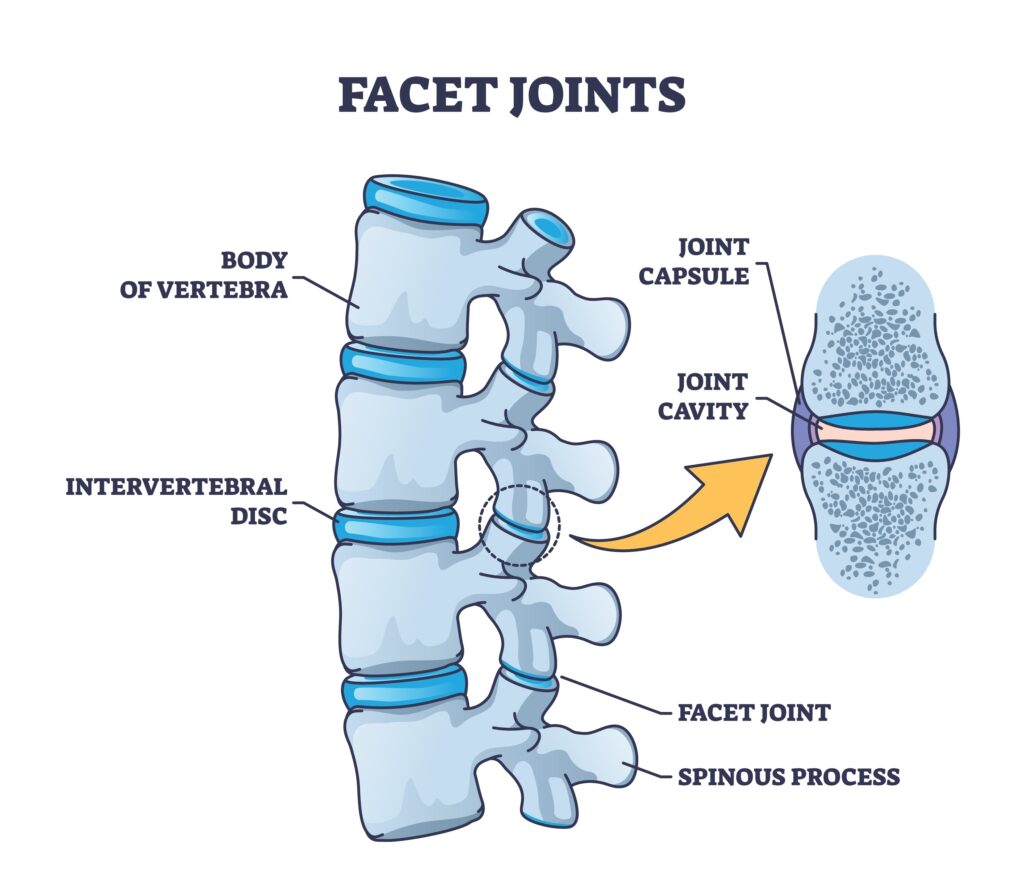
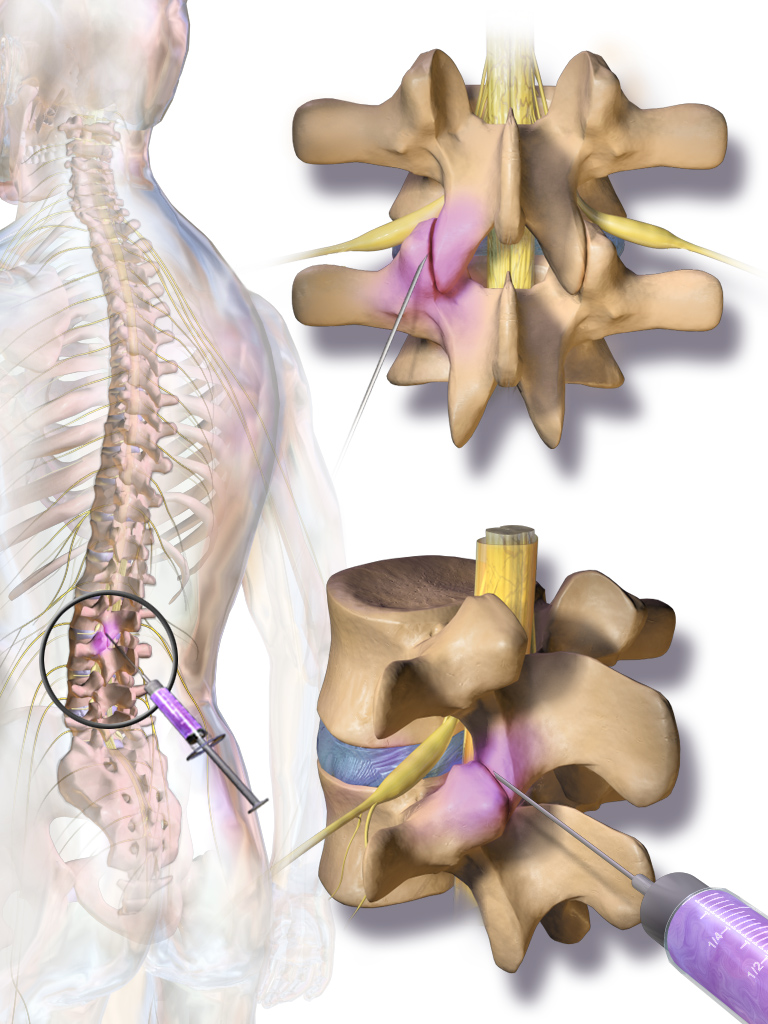
A facet joint injection places medicine directly into a selected joint. The local anaesthetic temporarily numbs the area. If corticosteroid is included, it is intended to reduce inflammation.
You may hear it called a spinal joint injection, facet steroid injection or injection for facet joint arthritis.
The procedure uses imaging guidance to help position the needle. Your doctor will explain which joint is being targeted and whether the aim is to gather diagnostic information, relieve symptoms or both.
The facet joint injection and the medial branch block target different places.
A facet joint injection places medicine into the joint. A medial branch block places local anaesthetic near the small nerves that carry pain signals from the joint.
A diagnostic medial branch block is used to assess whether those nerves are involved in your pain. Its effect is expected to be temporary, and the response may help guide a decision about radiofrequency treatment.
These procedures should not be treated as interchangeable. Ask your doctor which injection is proposed and what the result will help establish.
Facet joints may be one possible source of persistent back or neck pain, but pain location alone cannot confirm this.
Your doctor will consider whether another explanation—such as a disc problem, nerve irritation, hip condition or muscle-related pain—better fits your symptoms.
Pain travelling down a leg or arm, particularly with numbness or weakness, needs assessment for nerve involvement rather than assuming it is facet pain.
Explore back pain assessment and other pain treatment options at Specialist Pain International.
An injection is not a routine first step for back or neck pain. Your doctor should first review the likely cause, previous treatment and whether the result would change your care.
There is also an important distinction between a steroid injection intended to relieve pain and a diagnostic block used before considering radiofrequency treatment.
Guidelines differ on therapeutic facet injections. For example, NICE advises against spinal injections for managing low back pain, while allowing assessment for radiofrequency denervation in selected patients after a positive diagnostic medial branch block.
Your consultation should explain the evidence, limitations and alternatives relevant to the proposed procedure.
A scan can show arthritis or other structural changes, but it does not establish that a particular joint is causing pain. Similar changes can be present without symptoms.
Your doctor will review imaging alongside your pain history and examination. Further investigations or a diagnostic block may be considered if they would help guide treatment.
An abnormal scan does not automatically mean you need an injection.
A pain specialist can assess persistent back or neck pain and discuss whether rehabilitation, medication, an injection or another approach may be appropriate.
Dr Nicholas Chua is the Medical Director and Consultant in Pain Medicine and Anaesthesiology at Specialist Pain International, Mount Elizabeth Novena Medical Centre.
Give your team a complete medication list and tell them about allergies, diabetes, recent infections and any possibility of pregnancy. If you are taking blood-thinning medicines, inform the care team but do not stop them yourself. They will give instructions based on the planned procedure and your medical circumstances.
Check whether fasting is required, whether sedation is planned and whether someone should accompany you home. Follow the clinic’s instructions as it may differ depending on your unique circumstances.

Your doctor will explain the process of the procedure and obtain your consent prior to starting any procedure.
You are positioned so the selected joint can be reached. The skin is cleaned, and local anaesthetic may be used to numb the entry area. Using imaging guidance, the doctor positions a fine needle and injects the medicine. More than one joint may be treated if appropriate or indicated. You may notice brief stinging, pressure or discomfort; tell the team if you are uncomfortable.
Afterwards, you are monitored before discharge back home.
There is no fixed duration. Relief may be brief, last longer or not occur.
For a diagnostic block, short-lived relief can still provide useful information. For a therapeutic injection, benefit should be judged by meaningful changes in pain and function.
A temporary response does not prove that repeat injections will provide lasting relief.
Your doctor will review the degree and duration of improvement and whether it fits the expected effect of the medicine.
If pain settles, this may provide an opportunity to build movement and strength through rehabilitation.
If a diagnostic medial branch block gives an appropriate response, radiofrequency treatment may be discussed. It is a separate procedure that uses controlled heat to target selected nerves. Not everyone who benefits from an injection needs it, and a positive block does not guarantee success.
Tell your doctor about the lack of benefit. It may prompt a review of the suspected pain source or a change in the treatment plan.
Repeating the same injection is not automatically the next step. Your doctor should explain whether another investigation, rehabilitation approach or specialist assessment would be more useful.
Possible effects include soreness, bruising, bleeding, a temporary pain flare, dizziness and temporary numbness or weakness. Infection, allergic reactions and serious nerve injury may occur in rare instances. Risks vary with the injection site and technique.
If a corticosteroid is used, it may temporarily raise blood glucose and can sometimes cause flushing or skin changes around the injection site. Discuss your individual risks before proceeding.
Follow your team’s instructions about driving, wound care, work and exercise. Arrange transport home if advised, and do not drive while affected by sedation, numbness or weakness.
Avoid immediately testing the injection with heavy lifting or strenuous exercise. Gradually return to activity as advised. As with aftercare, return to activity can differ from person to person, so rehabilitation remains important even if pain improves. Gentle movement and an appropriate exercise plan can help you make use of any period of relief.
If persistent back or neck pain is affecting your daily life, arrange a consultation with Dr Nicholas Chua at Specialist Pain International.
Bring previous scans and reports, a medication list and details of treatments you have tried. If you have had a spinal injection before, note which procedure was performed, whether it helped and how long any benefit lasted. A short pain diary can show how symptoms affect your day and help identify useful treatment goals.
The consultation will focus on understanding your symptoms and discussing whether a facet joint injection, diagnostic medial branch block or another approach may be appropriate.
Still unsure if you should see a pain specialist for your pain? We address some common questions about resolving pain and what we do below. Click the various questions to find out more!
No. A facet injection targets a spinal joint. An epidural places medicine into the epidural space and may be considered for different symptoms, such as selected cases of nerve-related pain.
No. It does not reverse arthritis or restore damaged cartilage. The purpose is to gather information or help manage symptoms.
A diagnostic medial branch block generally uses local anaesthetic to temporarily numb the nerves supplying the joint. Ask your doctor exactly what will be injected and why.
There is no automatic course for everyone, as it depends on one’s unique condition. Further injections depend on the purpose, response, risks and whether they would change your treatment plan.
They target different structures. A facet injection does not remove a disc bulge or directly decompress a spinal nerve. A thorough assessment is needed to identify which problem is contributing to your symptoms.
Costs depend on the joints treated, imaging, medicines, facility and any sedation. Ask the clinic for an estimate and confirm insurance requirements to understand your treatment better.
Seek urgent medical assessment for new or worsening weakness, loss of bladder or bowel control, numbness around the genitals or anus, or severe symptoms after the procedure.
Fever, increasing redness or swelling, or progressively worsening pain around the injection site also needs prompt medical advice.

Specialist Pain International treats acute, chronic, and cancer pain with expert diagnosis, therapies, and patient-first care for faster recovery.
Explore
Address
Mt. Elizabeth Novena Medical Centre 38 Irrawaddy Road, #09-43 Singapore 329563
Operating Hours
Contact
WhatsApp us