
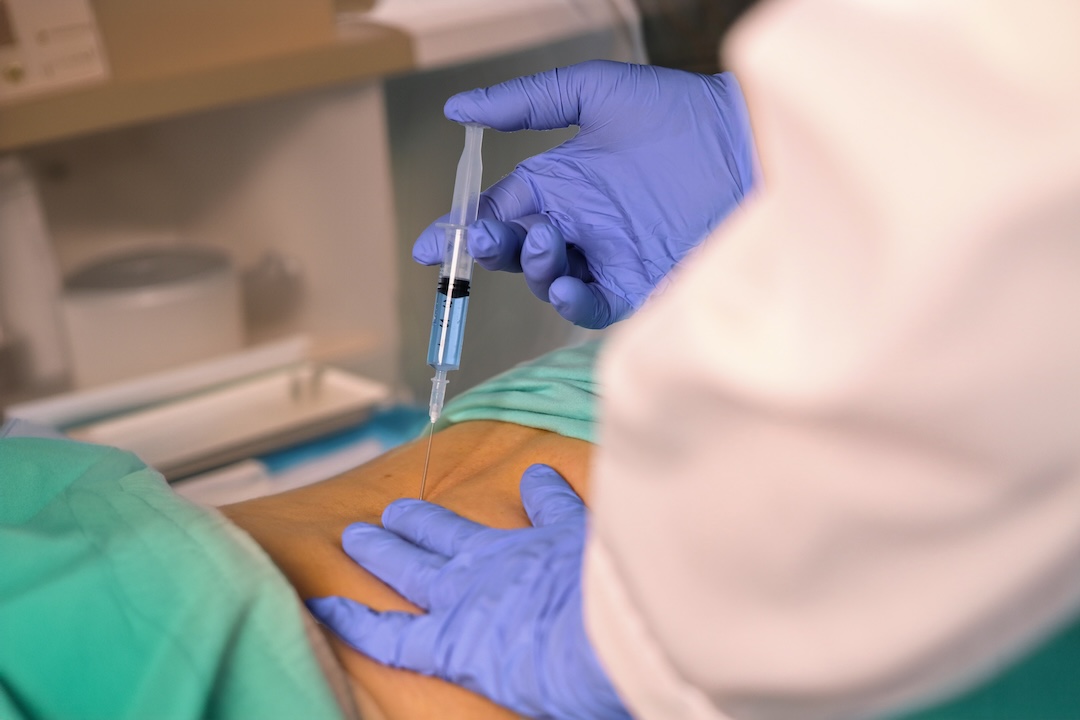
Chronic back and leg pain can persist even after conventional treatments such as medication, physiotherapy, or spinal injections. For some patients, the underlying cause lies deep within the spinal canal, where inflammation, scar tissue, or nerve irritation cannot be clearly identified on standard imaging alone. One effective option for relief is epiduroscopy for back and leg pain.
Epiduroscopy is a minimally invasive procedure that allows direct visualisation of the spinal epidural space. It enables pain specialists to accurately diagnose and treat sources of persistent spinal pain that may otherwise remain hidden, offering a solution for those suffering from epiduroscopy for back and leg pain.
What Is Epiduroscopy?
Epiduroscopy is an advanced interventional pain procedure that uses a thin, flexible endoscope to examine the epidural space of the spine. The epidural space surrounds the spinal nerves and is a common source of pain due to inflammation, adhesions, or nerve compression. This technique is specifically beneficial for conditions leading to epiduroscopy for back and leg pain.
Unlike MRI or X-ray imaging, epiduroscopy allows the doctor to see the spinal structures in real time and, in many cases, treat the problem during the same procedure.
Why Epiduroscopy Is Used in Chronic Pain Management
Chronic spinal pain is often multifactorial. In some patients, pain persists not because of major structural damage, but due to subtle nerve irritation, inflammation, or scar tissue that interferes with normal nerve movement.
Epiduroscopy is commonly used to:
- Identify inflammation or irritation around spinal nerve roots
- Detect epidural adhesions or scar tissue
- Assess causes of pain not clearly visible on MRI
- Guide targeted treatment directly to the source of pain
Conditions That May Benefit from Epiduroscopy
Epiduroscopy is not required for all cases of back pain, but it may be helpful in selected patients with persistent symptoms.
- Chronic low back pain with or without leg pain
- Sciatica or nerve-related leg pain
- Failed back surgery syndrome
- Post-surgical spinal adhesions
- Persistent pain despite spinal injections
How the Epiduroscopy Procedure Works
Epiduroscopy is performed using a very thin endoscope inserted through a small opening, usually at the lower back or sacral region. The procedure is done under sterile conditions and may involve local anaesthesia with sedation.
Step-by-Step Overview
- A small access point is created to reach the epidural space
- A flexible endoscope is guided along the spinal canal
- The doctor visualises nerves, blood vessels, and surrounding tissues in real time
- Inflammation, scar tissue, or nerve compression is identified
- Medication or mechanical release may be applied directly if appropriate
This targeted approach allows treatment to be delivered precisely where it is needed, rather than relying on blind or generalised injections.
What Can Be Treated During Epiduroscopy?
In addition to diagnosis, epiduroscopy can be therapeutic. Depending on the findings, the procedure may allow for:
- Breaking down epidural adhesions or scar tissue
- Targeted delivery of anti-inflammatory medication
- Reducing nerve irritation caused by chronic inflammation
- Improving nerve mobility within the spinal canal
By addressing these contributors directly, epiduroscopy can help reduce pain intensity and improve function in selected patients.
Advantages of Epiduroscopy
Compared to more invasive spinal procedures, epiduroscopy offers several potential advantages.
- Minimally invasive with no large surgical incisions
- Direct visual confirmation of pain sources
- Targeted treatment rather than generalised injections
- Short recovery time for most patients
Recovery After Epiduroscopy
Epiduroscopy is commonly performed as a day procedure. Patients are usually observed for a short period before going home on the same day.
Mild soreness at the entry site or temporary symptom changes may occur, but most patients can return to light activities within a few days. Your pain specialist will provide personalised guidance on activity modification and follow-up care.
Who Is Suitable for Epiduroscopy?
Not all back pain requires epiduroscopy. Careful patient selection is essential to ensure the procedure is appropriate and beneficial.
Epiduroscopy may be considered if:
- Pain has persisted for several months despite conservative treatment
- Symptoms suggest nerve-related pain without clear imaging findings
- Previous spine surgery has resulted in ongoing pain
- Other interventional treatments have not provided sufficient relief
The Bottom Line
- Epiduroscopy allows direct visualisation of the spinal epidural space
- It helps identify hidden causes of chronic spinal pain
- The procedure can be both diagnostic and therapeutic
- Careful specialist assessment is key to determining suitability
At Specialist Pain International, epiduroscopy is used as part of a comprehensive pain management approach, focusing on accurate diagnosis, minimally invasive treatment, and long-term functional recovery.