

Treatment for Slipped Disc, Herniated Disc, and Nerve Impingement
Slipped discs, herniated discs, and nerve impingement are common causes of chronic back pain and radiating nerve symptoms. For many patients, these conditions can lead to persistent pain, numbness, weakness, and reduced mobility that interfere with daily life.
Advancements in pain management and minimally invasive spine procedures now allow targeted treatment of disc-related conditions without the need for open surgery. At Specialist Pain International, our approach focuses on relieving nerve pressure while preserving spinal structures and speeding up recovery.
Understanding Slipped Discs and Herniated Discs
A “slipped disc” is a commonly used term, but discs do not actually slip out of place. Instead, pain occurs when the soft, gel-like centre of a spinal disc pushes through its tougher outer layer.
This disc bulge or herniation can press against nearby spinal nerves, leading to inflammation and nerve impingement.
How a Herniated Disc Causes Pain
- Compression of spinal nerve roots
- Sharp or shooting pain radiating into the arms or legs
- Numbness, tingling, or “pins and needles” sensations
- Muscle weakness in the affected limb
Degenerative changes due to ageing, trauma, or spinal wear and tear can further narrow spaces around the nerves. This may make standing, walking, sitting, or bending increasingly painful, especially when the spine is flexed near the affected disc.
What Is Endoscopic Disc Decompression?
Endoscopic disc decompression is a minimally invasive spine procedure designed to reduce pressure on spinal nerves caused by disc bulges or herniations.
Endoscopic techniques have been safely used in medicine for decades and are now widely applied in interventional pain management for disc-related spine conditions.
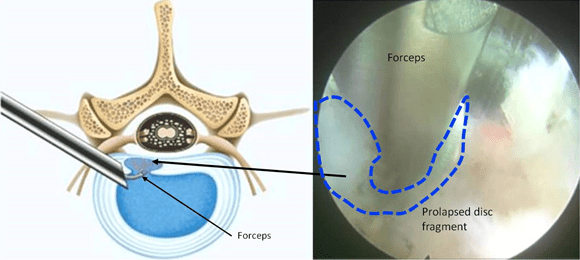
How the Procedure Works
- A small endoscope (6–9 mm in diameter) is inserted through a tiny incision
- The doctor visualises the affected disc in real time
- Specialised instruments remove small amounts of disc material
- Reduced disc volume allows the bulge to retract naturally
By relieving pressure on compressed nerve roots and reducing spinal canal narrowing, this procedure helps ease pain, restore nerve function, and improve mobility.
Most endoscopic disc decompression procedures are completed in under 60 minutes and are performed as a day procedure, followed by a short recovery period and a follow-up consultation.
Advantages of a Minimally Invasive Spine Approach
Compared to traditional open spine surgery, minimally invasive endoscopic procedures offer significant benefits.
- Minimal disruption to muscles, nerves, and surrounding tissues
- Smaller incisions and reduced scarring
- Lower risk of complications
- Faster recovery and shorter downtime
Many patients experience pain relief soon after the procedure, with most returning to normal daily activities within one to two weeks.
Who Is Suitable for Endoscopic Disc Decompression?
Surgery is not always the first line of treatment for disc-related pain. Conservative treatments such as medication, physiotherapy, and lifestyle modification are often recommended initially.
You may be considered for endoscopic disc decompression if:
- Symptoms persist despite non-surgical treatment
- Pain continues to interfere with daily activities
- Nerve impingement causes weakness or sensory changes
- Imaging confirms disc-related nerve compression
Our specialists focus on selecting the least invasive and most effective treatment tailored to each patient’s condition.
Recovery and Long-Term Pain Relief
After endoscopic disc decompression, patients are advised to avoid heavy lifting and strenuous activity for approximately two weeks to allow proper healing.
Most individuals can resume light daily activities within a week. Any post-procedure discomfort is typically mild and short-lived, especially when compared to the debilitating pain caused by chronic nerve compression.
With proper rehabilitation and guidance, many patients experience lasting relief and improved quality of life.
The Bottom Line
- Slipped and herniated discs can cause chronic pain and nerve symptoms
- Nerve impingement often explains radiating pain, numbness, and weakness
- Endoscopic disc decompression offers a minimally invasive solution
- Early specialist assessment improves long-term outcomes
At Specialist Pain International, we focus on precise diagnosis, minimally invasive treatment, and personalised recovery plans to help patients regain movement and live with less pain.